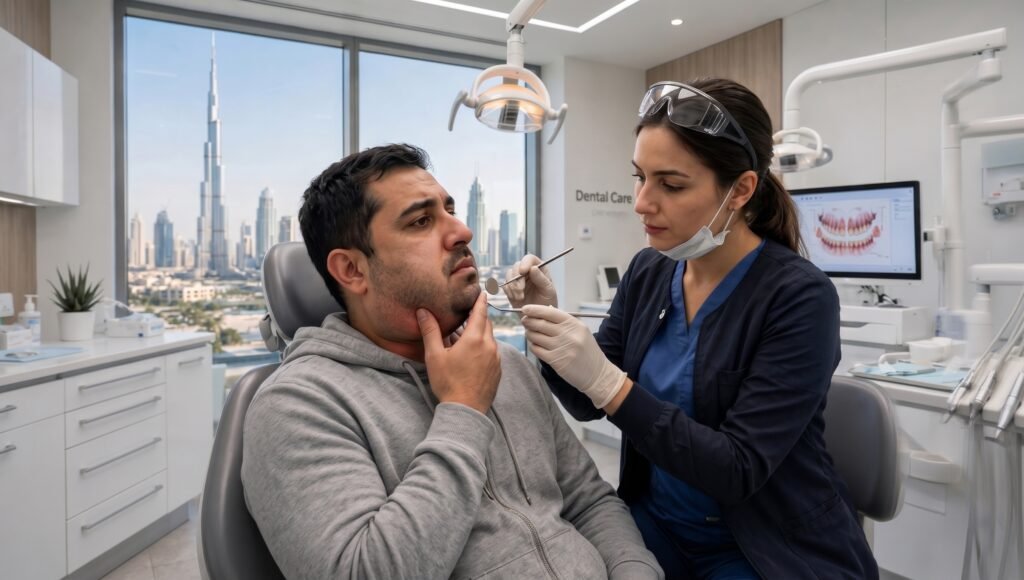
Dental abscess treatment is necessary. Don’t ignore it. It can create many complications that we do not even want to imagine.
You get a toothache. It eases in a day with a painkiller, and you feel relaxed.
Why?
This is because most of us do not consider it important and don’t know that some serious process is going on inside the tooth that is causing it. Pain is a symptom, just like an alarm that indicates and alerts us to the dental issue going on deep inside the tooth.
Maybe the issue is not big in some cases, but some toothaches are not just aches. They are a sign of infection, and an infected tooth does not heal by itself. Knowing the warning signs, and knowing when a problem becomes an emergency, can protect both the tooth and the person’s health.
- What is a dental abscess?
- What it feels like
- Why does it happen?
- What dental abscess treatment actually involves?
Let’s learn about it in this blog.
What is a dental abscess?
When germs, i.e., bacteria, get into the part of the body where they should not go, the body fights back. They infect a tooth or the gum beside it. Pus collects in a small pocket. That pocket is called a dental abscess.
The most common type starts inside the tooth where tooth pulp is present. It is soft tissue that contains nerves and blood vessels for tooth and gum nourishment. A tooth abscess occurs when bacteria invade this dental pulp. Access to the pulp is made through the tooth cavity.
First, bacteria attack the hard outer surface of the tooth. This is known as tooth enamel. Eat it away and if not stopped through treatment it slowly make cavities. Through this cavity, it reaches the pulp inside and causes infection. Not just the cavity. The entry of bacteria is also possible when a crack or chip in a tooth is ignored and not treated properly. These tooth conditions also provide a way for bacteria to reach the pulp.
Tooth infection symptoms to watch for
Not everyone has every sign, but these are the ones that most often occur:
- A severe, constant, throbbing toothache that can spread to the jaw, neck, or ear
- Pain or sensitivity when something hot or cold touches the tooth
- Pain when chewing or biting down
- Swelling in the face, cheek, or neck
- Tender, swollen glands under the jaw or in the neck
- A bad taste or bad breath
- Fever, or just feeling generally unwell
- Difficulty opening the mouth
The pain often starts suddenly and can get worse over a few hours or days.
It may also happen that the pain disappears suddenly. If the abscess bursts, there may be:
- A rush of foul-tasting
- Salty fluid in the mouth
- Followed by pain relief
That does not mean that the pus in the gum has gone. A tooth abscess won’t go away without treatment, so a dentist visit is still needed.
Moreover, in many cases it is observed that an infection in the tooth’s pulp “may or may not be painful”. A tooth can be infected without hurting much, which is one more reason regular checkups matter.
Pus in gums and swollen face
You definitely need to see an emergency dentist in Dubai when these two signs appear:
- Pus in gums
- A swollen face with a tooth problem
These are the points to worry about. Pus is the clearest sign that an infection has formed a pocket. It may show up as:
- Bad taste in the mouth
- As fluid when an abscess drains
A swollen face tooth decay causes is more serious. Infection is spreading beyond the tooth if there is swelling in the:
- Face
- Cheek
- Neck
When an abscess doesn’t drain, the infection may spread to the jaw and to other areas of the head and neck. Also, it may cause sepsis, a life-threatening infection that spreads through the body, as a possible complication.
This is why swelling should never be treated as just part of the toothache, and dental abscess treatment should be started by consulting a dentist.
Why do dental abscesses form?
Teeth have a hard outer shell, but if the shell is broken, bacteria can slip through and reach the soft pulp inside. The usual routes in are:
- A cavity that has been left untreated and has grown deeper
- A chipped tooth or a cracked tooth also gives a way for bacteria to enter the tooth
- A tooth whose pulp has died or become inflamed can lead to infection
That is why small problems matter and need to be treated early. A small cavity that is filled early rarely turns into an abscess. A cavity that is ignored for months can.
When to go to hospital, not just the dentist
Most abscesses need an emergency dentist in Dubai if:
- There is a fever
- Swelling in the face
- There is trouble breathing or swallowing
- Severe pain that does not respond to painkillers
Dental abscesses do not heal by themself
The only way to cure it is usually with dental abscess treatment by a dentist. Many people prefer to see a general physician in this case. They can give advice but cannot provide the treatment needed to cure an abscess. Moreover, they direct patients towards a dentist who can treat this.
Moreover, patients should also understand that painkillers are not the cure. They can just kill pain, not the infection. When patients take painkillers, the pain is settled, so is the patient. They ignore the treatment, which gives the infection time to spread with more power. Treatment for the infection is provided by a dentist. It may involve removing infected pulp and taking oral antibiotics or some medicine to apply topically. Therefore, get dental abscess treatment from an expert dentist instead of waiting.
Dental abscess treatment
In such cases, the main concern of a dentist is the severity of the infection and the condition of the tooth, and whether it can be saved or extraction is needed for a complete cure.
There are four main approaches, which are often combined:
1. Draining the abscess.
The dentist makes a small cut so the pus can drain out, then rinses the area with saline. Sometimes a small rubber drain is left in to keep the area open while the swelling goes down.
2. A root canal
The dentist:
- Removes the diseased pulp
- Drains the abscess
- Seals the tooth
Root canal removes infection from its roots, and the natural tooth is prevented from extraction.
3. Removing the tooth
If the tooth can’t be saved, the dentist pulls it out and drains the abscess.
4. Antibiotics
Antibiotics are prescribed by the dentist after assessing the spread of infection. If the infection is just around the pus-filled area, an antibiotic course may not be needed.
Where Endodontics comes in
An endodontist is a dentist with extra training in treating infected teeth. They are specialists in “treating infected teeth and pulp”.
For an abscess caused by an infected pulp, an endodontist usually treats the tooth with a root canal or, in some cases, endodontic surgery. The procedure includes cleaning bacteria out of the tooth’s canals. Afterwards, a general dentist normally places a crown or another filling, and the tooth will go on to function like a natural tooth. Your dentist can advise whether an endodontist is needed or not.
While waiting for the appointment
Some comfort measures can help, but they are not a cure.
- Rinsing with warm salt water
- Taking over-the-counter pain relievers such as paracetamol (acetaminophen) or ibuprofen as needed
It is best to follow the label on any painkiller and to ask a pharmacist or dentist if there is any doubt, particularly for children or anyone taking other medicines. None of this replaces seeing a dentist. It only helps to get timely relief from pain so a patient can pass the time easily until reaching a dentist.
How to stop abscesses before they start
Because most abscesses begin with a cavity or a crack, prevention is mostly about catching small problems early:
- Brush your teeth in the morning and at night
- Use toothpaste that contains fluoride
- Clean spaces between the teeth
- Do not ignore cavities. Get them filled by a dental professional as they appear.
- See a dentist if a tooth chips or cracks, even if it doesn’t hurt
- Keep up with regular checkups and cleanings
- Never take a toothache lightly, especially when it comes at regular intervals.
Conclusion
A dental abscess treatment cannot be ignored. It is an infection that needs to be cured. An immediate dental appointment with a dentist from clinics like Klinika Dental Clinic in Dubai is necessary. Delays can prolong treatment plan and make issues more complicated that can be deadly like sepsis.
FAQs
1. What are the main tooth infection symptoms?
The following can be symptoms of a tooth infection:
- A severe toothache
- Pain in the jawbone, ears, or neck
- Pain when biting or chewing
- Sensitivity to hot and cold
- Swelling in the face, cheek, or neck
- A bad taste in the mouth
- Bad breath
- tender glands
- fever
2. Is it necessary that a tooth hurts when infection is present?
It may or may not be painful. That’s why dentists suggest regular dental checkups to catch the infection as it begins.
3. Is it possible that a dental abscess heals itself without providing any treatment?
It never gets better on its own. The infection needs proper treatment by a dentist. Otherwise, it will have time to spread more and more.
4. My pain suddenly stopped. Does that mean it’s healed?
In some cases, an abscess or pus pocket bursts open. However, it relieves the pain, but the infection is still there and needs medical attention to be eradicated completely.
5. When is a dental abscess an emergency?
You need emergency care if there is:
- trouble breathing or swallowing
- A fever
- Facial swelling
- Painkillers are not working